Rex Tech Auto Repair Blog – Expert Advice from a Certified Mechanic
When it comes to stopping your car safely and reliably, your brake pads are one of the most important components in the entire braking system. They might be small, but every time you press the brake pedal, your brake pads are doing the heavy lifting — literally bringing thousands of pounds of moving metal to a halt.
In this post, we’ll explain how brake pads work, what they’re made from, what role rotors play, and why replacing your pads before they’re completely worn out can actually save your rotors — and your wallet.
🛑 How Brake Pads Work
Brake pads are part of your disc brake system. When you press the brake pedal, hydraulic fluid pushes the brake caliper pistons outward, clamping the brake pads tightly against the brake rotor (the large metal disc attached to the wheel hub). This contact creates friction — and it’s that friction that slows your wheels down and brings the vehicle to a stop.
Because this process happens every time you brake — often at high speeds and under heavy pressure — brake pads wear down over time and need to be replaced regularly.
🧱 Brake Pad Materials: What Are They Made Of?
Brake pads are built to handle intense heat and friction. Depending on your vehicle and driving needs, they typically come in three main material types:
1. Semi-Metallic Brake Pads
• Made from a mix of metals (steel, copper, iron), graphite, and resin.
• Durable and heat-resistant, but can be noisy and harder on rotors.
2. Ceramic Brake Pads
• Made from ceramic fibers and bonding agents.
• Very quiet, low dust, and gentle on rotors — great for everyday driving.
3. Organic (NAO) Brake Pads
• Made from rubber, resin, glass, and sometimes Kevlar.
• Soft, quiet, and inexpensive, but wear faster than other types.
🔩 What About the Rotors?
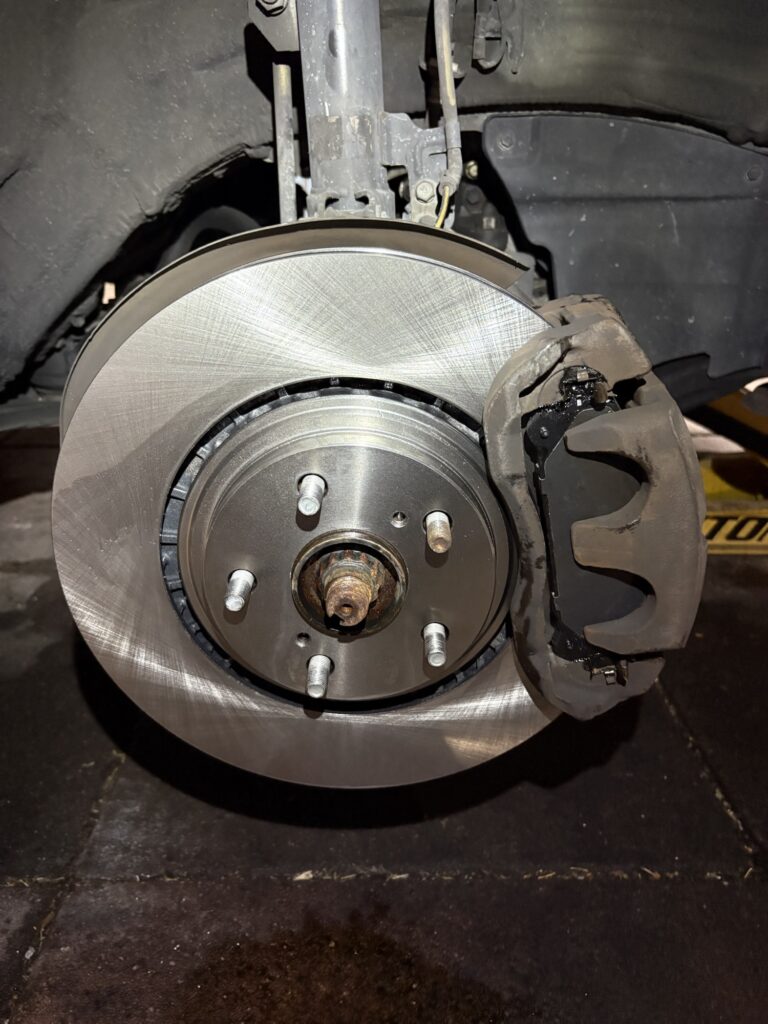
Brake rotors are just as critical as the pads. They’re the disc that spins with your wheels and serves as the surface the pads clamp down on to stop your car.
Rotors must be smooth and within specific thickness limits to ensure proper braking performance. If they become too thin, warped, or deeply grooved, braking becomes less effective, noisy, and even dangerous.
Here’s the good news:
If you replace your brake pads before they are fully worn down, your rotors can often be reused, as long as they are still within the manufacturer’s minimum thickness specification. This not only saves you money but also helps preserve the braking performance of your car.
⚠️ What Happens When Brake Pads Are Worn Out?
Letting your brake pads wear down too far can cause serious issues:
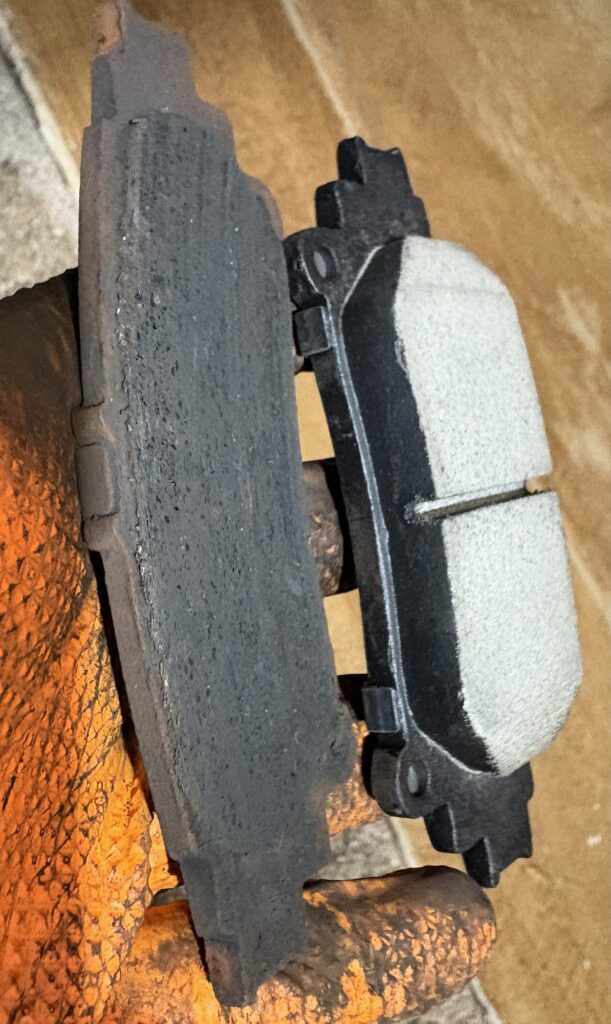
• Metal-on-metal contact: Once the friction material wears away, the steel backing plate grinds directly on the rotor, damaging it quickly.
• Rotor damage: Deep grooves, hot spots, or cracks can form, requiring full rotor replacement.
• Increased stopping distance: Worn pads and damaged rotors mean your car takes longer to stop.
• Brake noise: Squealing or grinding sounds usually mean it’s already too late.
• Brake fade: Overheating from worn pads can reduce braking power — especially dangerous during high-speed or downhill driving.
🛠️ When Should You Replace Your Brake Pads?
Most brake pads last between 20,000 and 40,000 miles, depending on the type of material and your driving habits. City driving, towing, or heavy braking can wear them down faster.
Early signs you need brake service:
• Squeaking or squealing when braking
• Grinding noise (urgent!)
• Soft or spongy brake pedal
• Vibration during braking
• Brake warning light
• A burning smell after driving
✅ Why Early Replacement Makes a Big Difference
By replacing your brake pads before they’re completely worn, you:
• Protect your rotors from damage
• May be able to reuse rotor
• Maintain safe braking performance
• Avoid expensive repairs from neglected brake systems
Bottom Line:
Brake pads and rotors work together to keep you safe. Staying ahead of wear — even by a few millimeters — can save you hundreds of dollars and ensure your car stops as it should. At Rex Tech Auto Repair, we offer full brake inspections, brake pad replacement, rotor inspection and replacement if needed, and full brake system repairs to keep you on the road and out of danger.
🚗 Need your brakes checked?
Book a brake inspection today at Rex Tech Auto Repair. Catch it early, save your rotors, and drive with confidence